Remember when I said today's pics would be related to yesterday's? Well, they are! Only we're going in the exact opposite direction of melanism... and it's
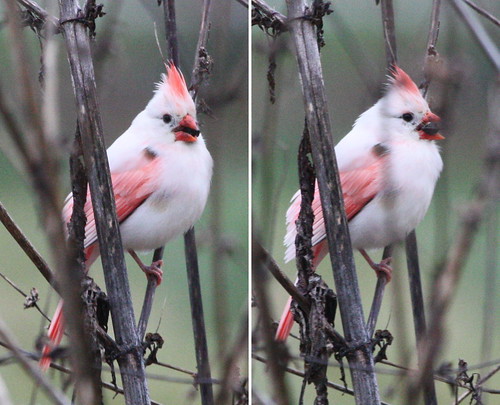
not albinism, but rather leucism. Where melanism means increased pigmentation, leucism reduces it. Leucistic animals often can be mistaken for albinism, but albinism only affects melanin production and not other pigments. Leucism can also occur partially while albinism covers everything- if you see an animal that's patchy-ly white as opposed to all white, chances are it's not albino but leucistic. Furthermore, most leucistic animals tend to have normal coloured eyes as opposed to red eyes.
This isn't that cute (unless you like crocodiles and alligators!) but provides a quick comparison of what albino and leucistic animals look compared against each other. As with yesterday, all the images come first, then names at the end.
 source
 source
 source
 source
 source
 source
 source
 source
 source
 source
 source
 source
1. Mandarin Duck
2. Sugar Glider
3.
Shiny Wooper Axolotl
4. Adélie Penguin
5. Northern Cardinal
6. Rat Snake
7. Fur Seal
8. Tiger
9. Lion
10. Kermode Bear
11. Redpoll
12. Fox Squirrel
And of course...

 source
Named
Euophrys omnisuperstes (which is a bilingual bonus name for those of you who know latin), this little spider isn't leucistic in the picture you see there, but it is pretty pale. A closer look at where it seems to be standing on would tell you why! This spider lives way up in the Himalayas on Mount Everest, and might just possibly be the highest permanent resident anywhere on earth. Incredibly enough, it's able to survive purely on plant matter and insects that have been blown up from down below. Spiders sure are pretty impressive creatures, aren't they? Hardy, too.
![[personal profile]](https://www.dreamwidth.org/img/silk/identity/user.png)
